
A fast, illustrated food history
From ancient flatbreads
to the New York-style slice.
Pizza developed over centuries: topped flatbreads appeared in antiquity, the modern form evolved in Naples, and Italian immigrants helped make pizza part of New York life by the late nineteenth century.
The complete story
How flatbread became pizza.
Pizza was not invented in one instant. Grain, fire, tomatoes, Naples, migration, and New York street life each added a chapter. Popular legends are identified as legends rather than presented as settled fact.
Grain, water, and fire.
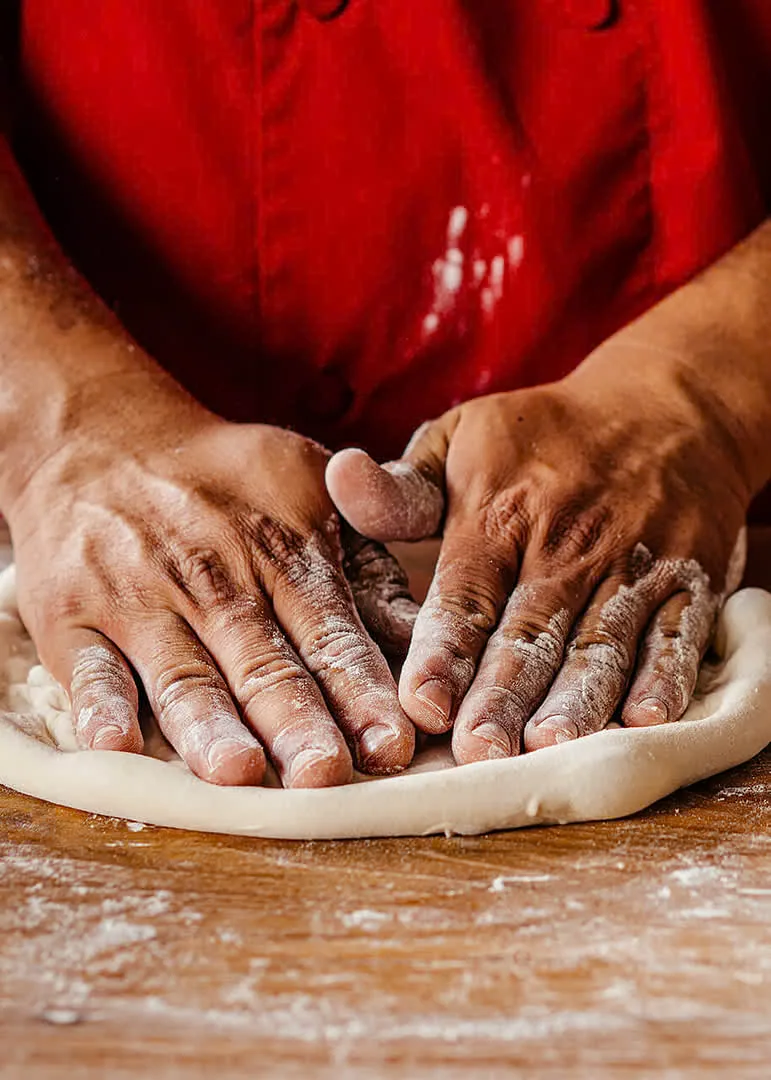
Long before the name pizza existed, people mixed ground grain with water and cooked flat rounds on hot stones, hearths, and early ovens. The basic idea—a warm, shareable bread—was already in place.
Toppings arrive on flatbread.
Across the Mediterranean and Near East, cooks dressed flatbreads with oil, herbs, cheese, dates, and other available foods. These were pizza’s ancestors, not yet the tomato-and-cheese dish we know today.
The word “pizza” enters the record.
A document from Gaeta in southern Italy contains the earliest widely cited written use of the word pizza. The term existed centuries before the modern recipe settled into place.
Tomatoes cross the Atlantic.
Tomatoes reached Europe from the Americas after the Columbian exchange. Europeans were initially cautious about them, but cooks in and around Naples eventually embraced the bright, inexpensive fruit.
Naples turns street food into a dish.
Working people in crowded Naples needed food that was fast, affordable, and easy to eat. Street vendors sold flatbreads topped with tomato, garlic, oil, cheese, or anchovies—the recognizable beginning of modern pizza.
Pizzerias make it an institution.
Dedicated pizza shops and written descriptions spread through Naples. Dough, tomato, mozzarella, herbs, garlic, and olive oil became established combinations, while bakers refined the blistered crust.
Margherita becomes an icon.
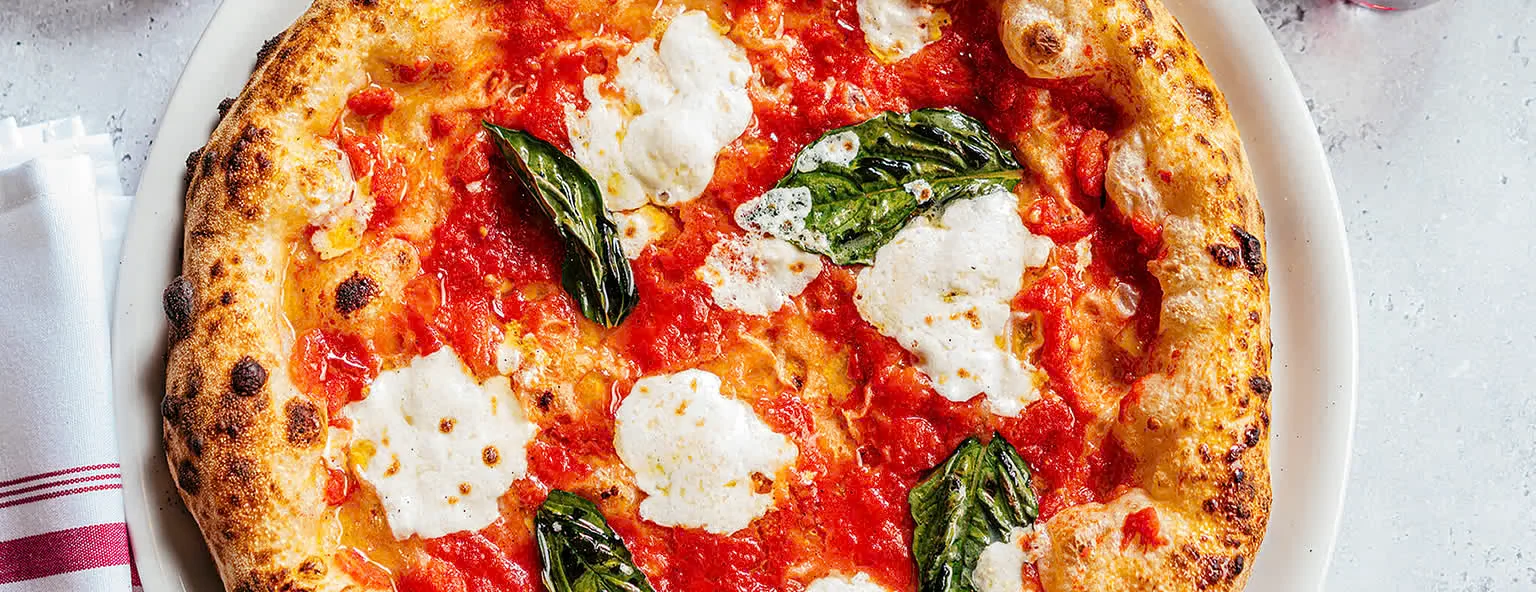
A famous story says baker Raffaele Esposito created a tomato, mozzarella, and basil pizza for Queen Margherita, echoing the colors of Italy. Historians debate parts of the tale, but the name and combination endured.
Italian migration carries pizza abroad.
Italian immigrants brought regional food traditions to American cities. In New York, pizza moved from immigrant neighborhoods into storefront ovens and gradually reached a much wider public.
New York builds its own style.
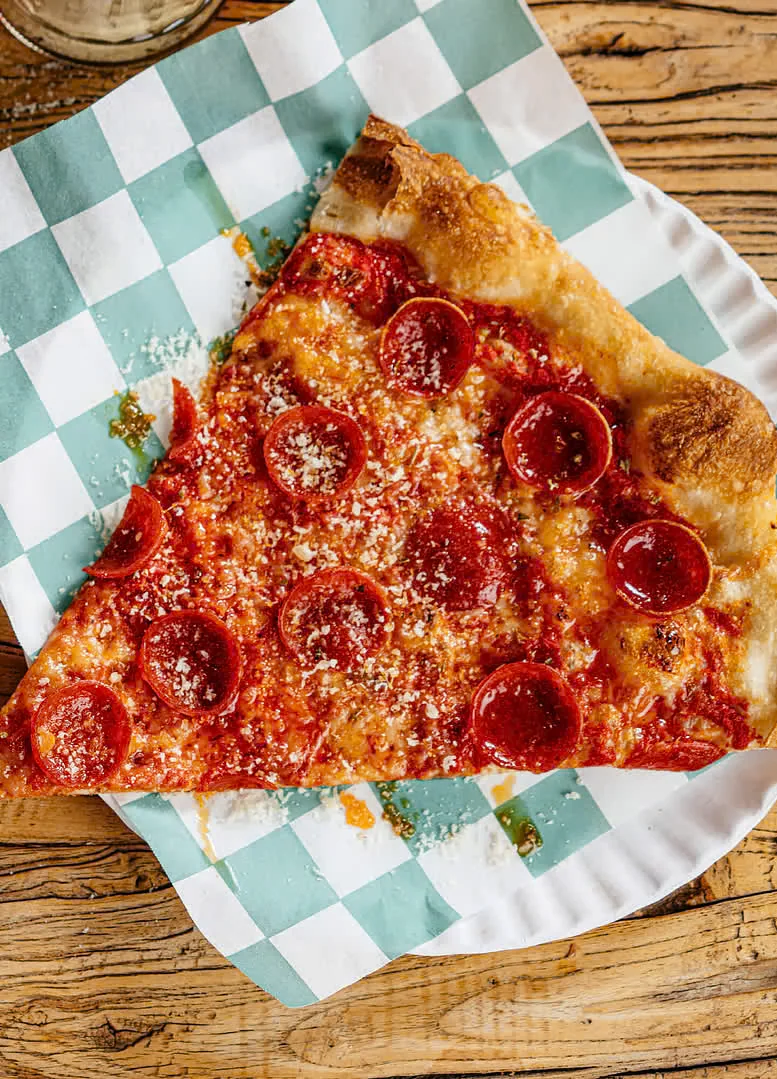
Coal- and gas-fired ovens, local ingredients, and the pace of city life helped shape larger pies with a crisp but flexible crust. Selling slices made pizza an affordable meal on the move.
Pizza becomes an American favorite.
Returning service members, migration, restaurants, frozen food, and national chains helped pizza travel far beyond Italian-American neighborhoods. Regional styles multiplied across the country.
The story keeps changing.
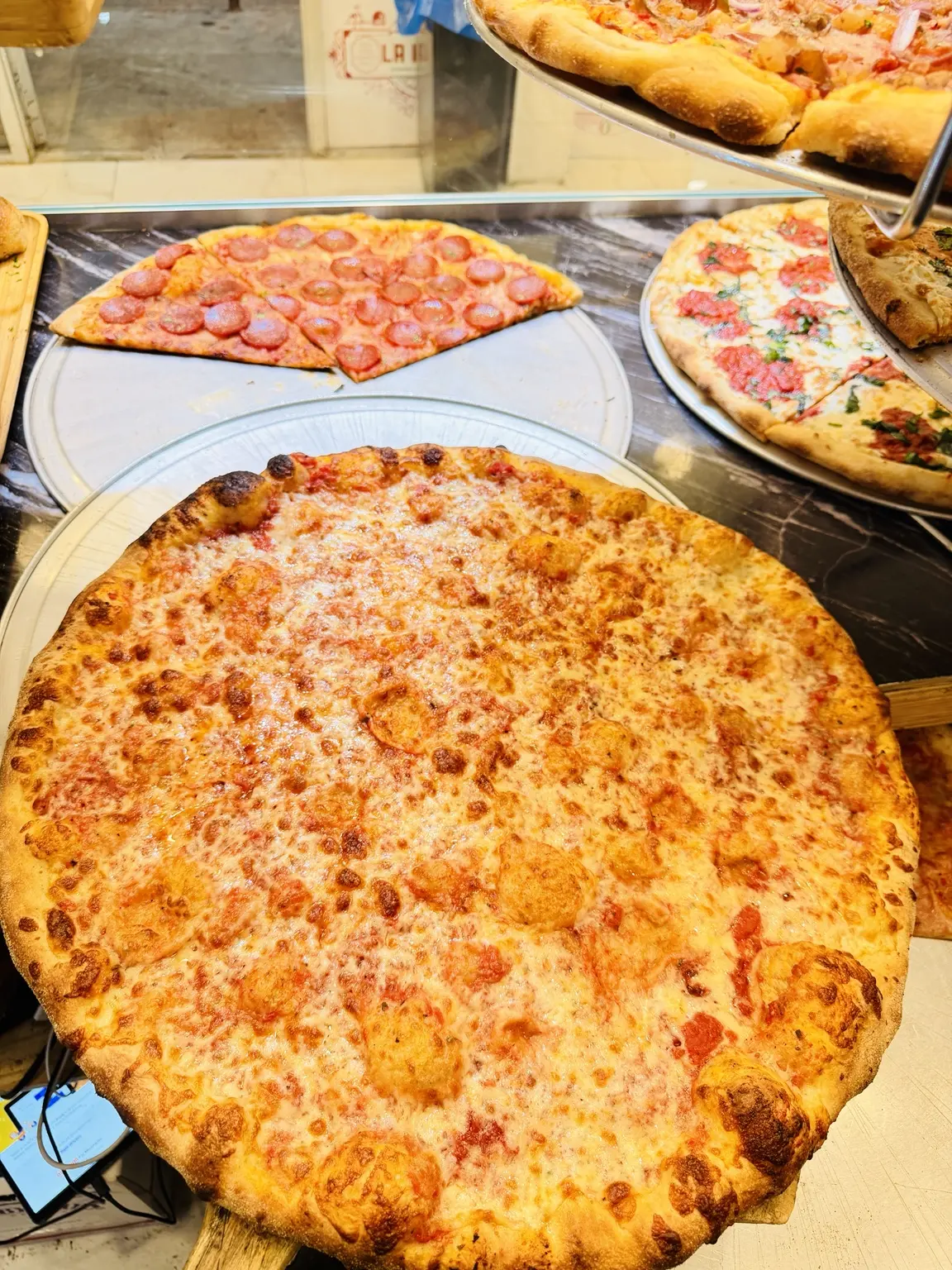
The classic foldable slice remains a city language, while cooks add burrata, specialty toppings, vegan cheese, and gluten-free crusts. At La Bianca, old New York technique meets today’s neighborhood appetite.
The story keeps moving
Taste the New York chapter.
La Bianca Pizza serves classic and specialty New York-style pies at 200 W 14th Street, close to Chelsea, Greenwich Village, the West Village, and Union Square.